
Year 7 Maths Test Papers PDF: A Comprehensive Guide (Updated February 26, 2026)
Navigating Year 7 maths can be daunting, but preparation is key! Accessing past papers in PDF format offers invaluable practice․
Specifically, AQA provides GCSE maths resources –
question papers and corresponding mark schemes are readily available online for download․
Consulting your teacher is crucial to determine if Foundation or Higher tier papers best suit your current skill level and learning needs․
What are Year 7 Maths Test Papers?
Year 7 maths test papers are assessments designed to evaluate a student’s understanding of mathematical concepts typically covered during their first year of secondary school․ These papers aren’t simply about rote memorization; they aim to gauge a student’s ability to apply mathematical principles to solve problems․
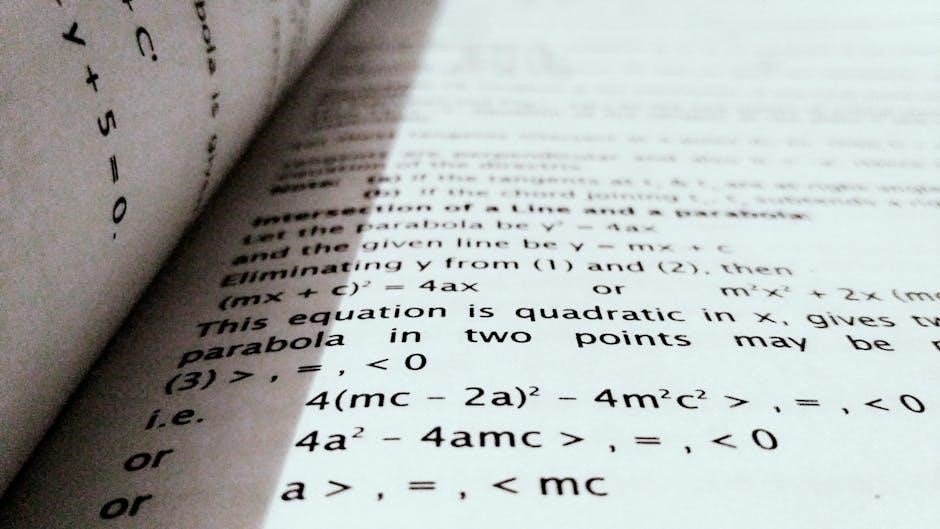
Often, these tests mirror the style and format of national curriculum assessments, preparing students for future examinations․ While specific content varies between schools and exam boards, core areas like number, algebra, ratio, geometry, and statistics are consistently assessed․
PDF versions of these papers are incredibly useful․ They offer a convenient, accessible, and printable format for revision․ Accessing past papers, like those from AQA (even GCSE level as a starting point), allows students to familiarize themselves with question types and marking schemes․
Crucially, understanding the difference between Foundation and Higher tier papers is vital․ Your teacher can advise which level is most appropriate for your current abilities, ensuring focused and effective preparation․ These papers are a tool for self-assessment and targeted learning․
Why Use Past Papers for Year 7 Maths?

Utilizing past papers for Year 7 maths revision offers significant advantages․ Firstly, they provide invaluable practice in exam conditions, helping students manage their time effectively and reduce test anxiety․ Exposure to varied question styles builds confidence and improves problem-solving skills․
PDF format enhances accessibility – papers can be downloaded, printed, and completed anywhere, anytime․ This flexibility allows for focused revision tailored to individual needs․ Furthermore, working through past papers identifies knowledge gaps, enabling students to concentrate on areas requiring further study․
AQA’s GCSE past papers, while a step up in difficulty, can serve as excellent practice, particularly for students aiming high․ They introduce more complex problem-solving techniques․
Understanding mark schemes (available alongside the papers) is crucial․ Students learn how examiners award marks, allowing them to refine their answers and maximize their potential․ Ultimately, past papers aren’t just about answering questions; they’re about learning how to answer them effectively and strategically․
Key Topics Covered in Year 7 Maths Tests
Year 7 maths tests typically assess a broad range of foundational concepts․ Number skills are central, including integer operations (addition, subtraction, multiplication, division), fractions, decimals, and percentages․ Students should expect questions involving order of operations (BODMAS/PEMDAS) and number properties․
Algebraic thinking emerges, with tests often including simplifying expressions, solving simple equations (one-step and two-step), and understanding variables․ Geometry is also prominent, covering shapes, angles, area, perimeter, and volume of basic 3D objects․
Data handling and statistics are frequently assessed, requiring students to interpret charts, graphs (bar charts, pie charts, line graphs), calculate averages (mean, median, mode, range), and understand probability․
Ratio and proportion are key areas, alongside measurement conversions (metric and imperial)․ While AQA GCSE papers introduce more advanced topics, reviewing these fundamentals within their resources can reinforce Year 7 understanding․ PDF past papers will demonstrate the weighting given to each topic, guiding focused revision efforts․
Where to Find Year 7 Maths Test Papers PDF Online
Locating Year 7 maths test papers in PDF format requires a strategic online search․ While dedicated Year 7 collections are less common, GCSE resources from exam boards like AQA, Edexcel, and OCR can be adapted for practice․
AQA’s website is a primary source, offering downloadable question papers and mark schemes for GCSE maths․ These can be filtered by topic and tier (Foundation or Higher)․ Remember to consult your teacher to determine the appropriate level․
Exam boards often archive past papers, so explore their respective websites’ ‘past papers’ or ‘assessment resources’ sections․ Websites specializing in educational resources may also curate collections of past papers, though verifying their source and accuracy is crucial․
Searching specifically for “Year 7 maths past papers PDF” on Google or other search engines can yield results, but exercise caution regarding website legitimacy․ Always prioritize official exam board websites for reliable and accurate materials․ Consider school resources too; teachers frequently share PDFs․
AQA Past Papers Relevance for Year 7 Preparation
AQA GCSE Maths past papers offer significant value for Year 7 students preparing for assessments, despite being designed for older students․ The foundational concepts tested in GCSE maths directly correlate with the Year 7 curriculum, providing a challenging yet beneficial practice resource․
Focusing on the Foundation tier papers is particularly useful, as these cover core mathematical principles that Year 7 students are expected to grasp․ These papers build confidence and reinforce understanding of key topics like number, algebra, ratio, and geometry․
However, it’s crucial to remember the increased complexity of GCSE questions․ Year 7 students shouldn’t be discouraged by difficulty; instead, they should focus on applying the underlying principles to simpler problems․ Teacher guidance is essential in selecting appropriate questions and interpreting mark schemes․
Utilizing AQA papers allows students to familiarize themselves with exam-style questions and develop crucial problem-solving skills․ This proactive approach fosters a stronger mathematical foundation for future success․
Edexcel Past Papers and Year 7 Alignment
Edexcel GCSE Maths past papers, similar to AQA resources, can be effectively utilized by Year 7 students as supplementary practice material․ While designed for a higher key stage, the core mathematical principles assessed align considerably with the Year 7 curriculum’s foundational objectives․

Edexcel papers offer a diverse range of question types, exposing students to varied problem-solving scenarios․ Focusing on questions related to number, algebra, geometry, and statistics – topics central to Year 7 maths – is highly recommended․ Prioritizing Foundation tier papers ensures the content remains accessible and appropriately challenging․
It’s important to acknowledge the increased difficulty level compared to typical Year 7 assessments․ Students should view challenging questions as opportunities for extension and deeper understanding, rather than sources of discouragement․ Seeking teacher support is vital for navigating complex problems and interpreting mark schemes accurately․
Regularly engaging with Edexcel past papers cultivates exam technique, enhances problem-solving abilities, and builds confidence in tackling mathematical challenges․ This proactive approach strengthens their overall mathematical proficiency․
OCR Past Papers as a Resource
OCR (Oxford Cambridge and RSA) GCSE Maths past papers represent another valuable resource for Year 7 students preparing for assessments, complementing AQA and Edexcel materials․ Like the other exam boards, OCR’s papers assess fundamental mathematical concepts that overlap significantly with the Year 7 curriculum’s core content․
OCR papers provide a different perspective on question phrasing and problem-solving approaches, broadening students’ exposure to various exam styles․ Focusing on topics directly relevant to Year 7 – such as number operations, algebraic thinking, shape properties, and data handling – is crucial for effective practice․ Foundation tier papers are the most appropriate starting point for Year 7 learners․
Students should be mindful that OCR papers, designed for GCSE level, may contain questions exceeding the complexity of typical Year 7 assessments․ These challenging questions can serve as excellent extension activities, encouraging deeper thinking and a more thorough grasp of mathematical principles․ Teacher guidance is essential for interpreting mark schemes and understanding advanced concepts․
Consistent use of OCR past papers, alongside other resources, fosters exam confidence, strengthens problem-solving skills, and reinforces mathematical understanding․

Independent School Exam Board Papers
Beyond the major exam boards (AQA, Edexcel, OCR), numerous independent schools utilize their own bespoke assessment papers․ While direct access to these PDFs can be more challenging to obtain, they represent a valuable, albeit less readily available, resource for Year 7 maths preparation․ These papers often emphasize problem-solving and application of mathematical concepts in varied contexts․
Independent school papers frequently showcase a higher degree of challenge and require a deeper understanding of underlying principles․ They can be particularly beneficial for students aiming for advanced levels or seeking to extend their mathematical capabilities beyond the standard Year 7 curriculum․ Accessing these resources often involves contacting the schools directly or exploring educational websites specializing in independent school materials․

When utilizing independent school papers, it’s crucial to focus on the core mathematical concepts rather than getting bogged down in unfamiliar question formats․ Teachers can adapt these questions to align with the specific curriculum being followed․ Analyzing mark schemes, when available, provides insight into the expected level of detail and reasoning․
Supplementing practice with these papers broadens exposure and enhances overall mathematical proficiency․
Types of Questions to Expect
Year 7 maths test papers, whether sourced from AQA, Edexcel, OCR, or independent schools, typically encompass a range of question types designed to assess diverse mathematical skills․ Expect a significant proportion of numerical problems requiring calculations with whole numbers, decimals, fractions, and percentages․ Algebraic questions, involving simplifying expressions and solving basic equations, are also common․
Geometry and measurement questions frequently appear, testing understanding of shapes, area, perimeter, volume, and angles․ Data handling and statistics are assessed through interpreting charts, graphs, and calculating averages․ Problem-solving questions, often worded as real-life scenarios, demand application of multiple mathematical concepts․
Multiple-choice questions are prevalent, requiring careful consideration of answer options․ Show-your-working questions are crucial, as partial credit is often awarded for demonstrating understanding of the method, even if the final answer is incorrect․ Expect questions that build in difficulty, starting with straightforward calculations and progressing to more complex multi-step problems․
Familiarity with these question types through consistent practice with past papers is essential for building confidence and maximizing performance․
Understanding Mark Schemes
Mark schemes are indispensable tools when utilizing Year 7 maths test papers PDF for effective revision․ They detail how examiners award marks for each question, providing insight into the expected method and level of accuracy․ AQA, in particular, makes these readily available alongside their past papers․ Understanding the mark allocation helps identify areas of strength and weakness․
Mark schemes aren’t simply about the final answer; they often award marks for demonstrating correct working, even if the answer is ultimately incorrect․ Look for ‘method marks’ which recognize understanding of the process․ Accuracy marks are awarded for correct calculations and precise answers․ Alternative methods are frequently accepted, and the mark scheme will outline how these are assessed․
Analyzing mark schemes reveals common errors and misconceptions․ Use them to self-assess your work, identifying where you lost marks and why․ Don’t just look at the correct answer; understand the reasoning behind the marking criteria․ This detailed approach transforms past papers from simple practice into powerful learning tools․
How to Effectively Use Past Papers for Revision
Utilizing Year 7 maths test papers PDF effectively requires a strategic approach, moving beyond simply completing the questions․ Begin by simulating exam conditions – timed practice without notes – to build speed and accuracy․ AQA past papers offer a realistic assessment experience․ After completion, meticulously review your answers, comparing them to the mark scheme․
Focus on areas of weakness identified through your self-assessment․ Revisit relevant topics and practice similar questions․ Don’t just repeat papers randomly; target specific skills․ Analyze your errors – were they due to conceptual misunderstanding, careless mistakes, or time pressure?

Mix and match papers from different years to expose yourself to varied question styles․ Use the papers diagnostically – to pinpoint knowledge gaps․ Regular, focused practice is far more effective than cramming․ Remember, the goal isn’t just to answer questions correctly, but to understand the underlying mathematical principles․

Creating a Revision Timetable with Past Papers
A well-structured revision timetable, incorporating Year 7 maths test papers PDF, is crucial for success․ Allocate specific time slots for past paper practice, treating them as mini-exams․ Begin with shorter papers or sections to build confidence, gradually increasing the duration․ AQA resources can be integrated seamlessly․

Prioritize topics based on their weightage in the syllabus and your personal weaknesses․ Schedule regular review sessions to reinforce concepts․ Don’t overload your timetable; allow for breaks and downtime․ Balance past paper practice with other revision methods – textbook exercises, online quizzes, and concept mapping․
Be realistic and flexible․ Life happens, so build in buffer time to accommodate unexpected events․ Track your progress and adjust the timetable accordingly․ Regularly assess your understanding using past paper mark schemes․ Remember, consistency is key – short, focused revision sessions are more effective than infrequent marathon sessions․
Common Mistakes to Avoid in Year 7 Maths Tests
Analyzing common errors from Year 7 maths test papers PDF is vital for improvement․ A frequent mistake is rushing through questions without careful reading, leading to misinterpretations․ Failing to show working, even for seemingly simple calculations, can result in lost marks – partial credit is often awarded․ Incorrectly applying formulas or using the wrong units is another common pitfall․
Ignoring key words in the question, such as “estimate” or “exact,” can lead to inaccurate answers; Not checking answers at the end of the test is a significant oversight․ Poor time management often results in unanswered questions, particularly towards the end of the paper․ AQA past papers highlight these errors․
Carelessly copying numbers from the question into calculations can introduce errors․ Misunderstanding the question’s requirements – for example, confusing area and perimeter – is also prevalent․ Practice with mark schemes helps identify where marks are typically lost, allowing focused revision․
Resources Beyond Past Papers: Websites & Books
Supplementing Year 7 maths test papers PDF practice with diverse resources is crucial for comprehensive learning․ Several websites offer interactive exercises and tutorials, reinforcing concepts explored in past papers․ Khan Academy provides free video lessons and practice exercises covering a wide range of maths topics․ BBC Bitesize offers concise explanations and quizzes aligned with the national curriculum․
CGP Books are a popular choice for Year 7 maths revision, providing clear explanations and practice questions; Collins Maths workbooks offer targeted support for specific topics․ Revision guides often include worked examples and exam-style questions, mirroring the format of actual test papers․ AQA’s website also provides supplementary materials․
Maths is Fun is a user-friendly website with engaging explanations and interactive tools․ Don’t underestimate the value of your school’s maths department – teachers can recommend tailored resources and provide individual support․ Utilizing a blend of these resources maximizes understanding and builds confidence․
Printing and Accessibility of PDF Papers
Downloading Year 7 maths test papers PDF offers flexibility, but consider printing for optimal revision․ Printing allows for annotation – highlighting key information, working through problems directly on the paper, and simulating exam conditions․ Ensure your printer has sufficient ink and paper before starting a large print job․
Accessibility is paramount․ If printing isn’t feasible, most PDF readers offer features like zoom, allowing you to comfortably view papers on a screen․ Adobe Acrobat Reader is a widely used, free PDF viewer with accessibility options․ Consider screen reader compatibility for students with visual impairments; ensure the PDF is tagged correctly for screen reader functionality․
Saving PDFs to a dedicated folder keeps resources organized․ Cloud storage (Google Drive, Dropbox) provides access across multiple devices․ Remember to check the file size before printing to avoid excessive paper usage․ Prioritize efficient and accessible use of these valuable resources․